







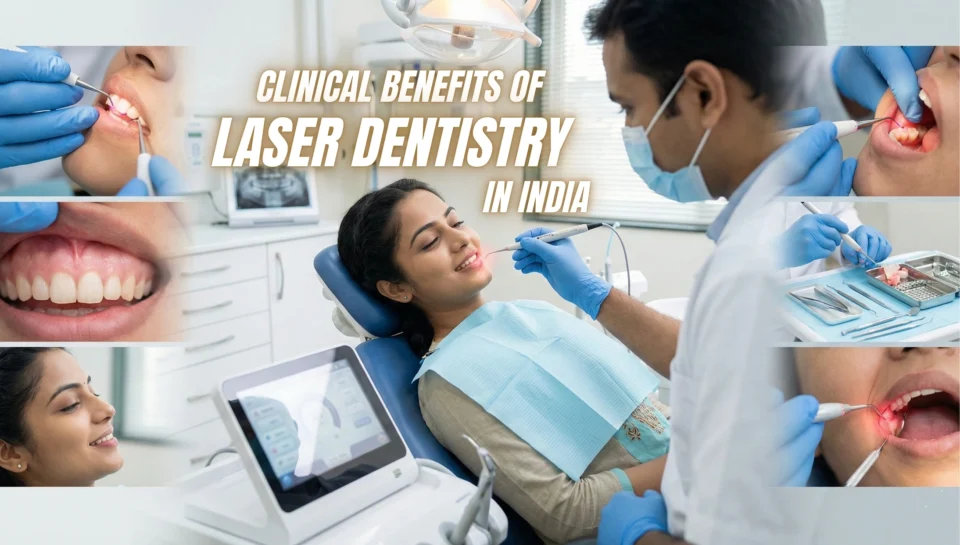
Going to the dentist can feel scary. The drill, needles, and long recovery worry many people. Laser dentistry uses a tiny beam of light to treat teeth and gums. It is quieter and gentler, so it’s less painful and healing is faster. I will explain how it works, what it can do, and why many choose this option.
What Is Laser Dentistry
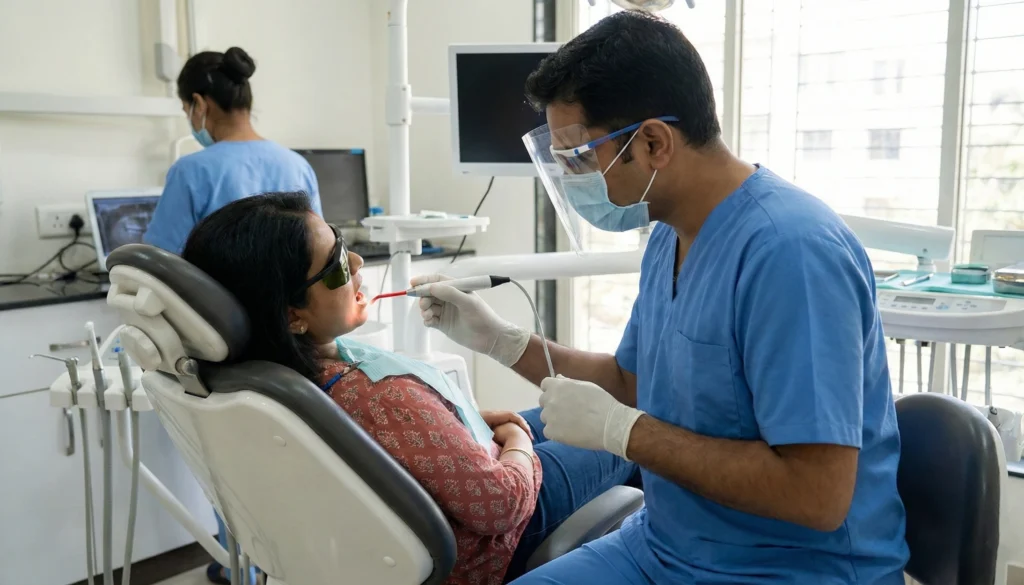
Laser dentistry uses a tight beam of light to work inside the mouth. The beam can cut, clean, or seal tissue. It serves both soft tissue and hard tissue needs. The beam aims at the problem only, so healthy parts stay safe. This precise action helps with many common treatments, from decay removal to gum care.
How Dental Lasers Work
A laser machine turns power into a focused light. That light heats or removes small bits of tissue. On gums the beam cuts and seals blood vessels. On teeth the beam can remove decay and prepare a spot for a filling. The heat also lowers bacteria, so the area stays cleaner after the procedure.
Types of Dental Lasers
Lasers used in the mouth come in two main types. Soft tissue lasers work on gums and inner mouth. Hard tissue lasers work on enamel, dentin, and bone. Dentists pick the right type depending on the task.
Common Dental Lasers Used
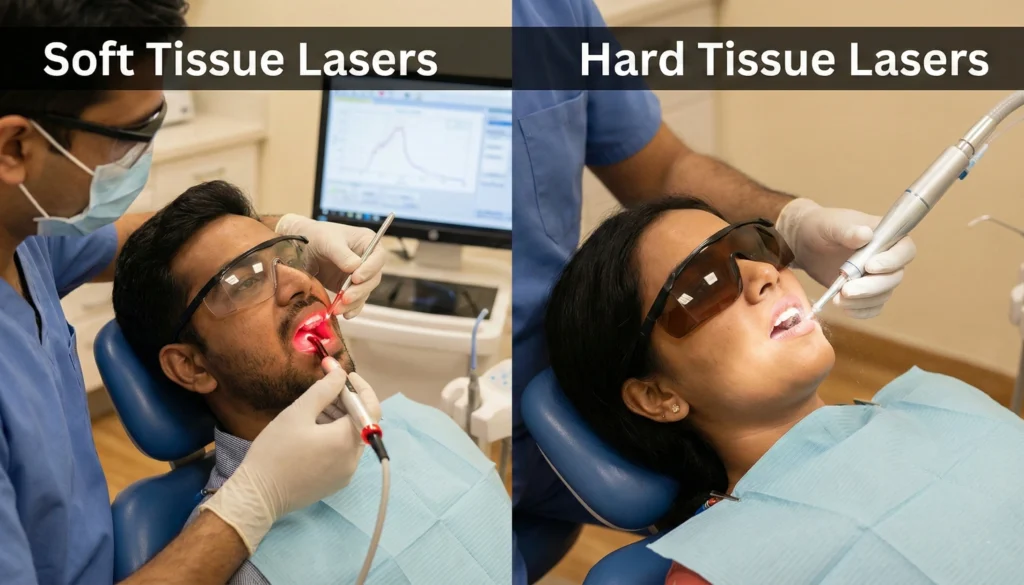
Soft Tissue Lasers
Soft tissue lasers help with gum cleaning and curettage and in reshaping the gum line. They seal as they cut, so bleeding and swelling drop and the site heals faster.
Hard Tissue Lasers
Hard tissue lasers remove decay and ready a tooth for a filling. They can also aid in parts of an extraction by softening tissue around a tooth. This support can make extraction steps simpler. Many patients feel less pressure than with a drill.
Clinical Benefits of Laser Dentistry
Laser dentistry brings clear benefits for patients and dentists.
- Less pain during and after a visit
- Less bleeding and swelling because the beam seals tissue
- Faster healing of gums and treated sites
- Lower chance of infection since lasers reduce bacteria
- High precision that protects nearby healthy tissue
These points explain why many clinics offer laser care as an advanced choice.
Laser Dentistry vs Traditional Methods
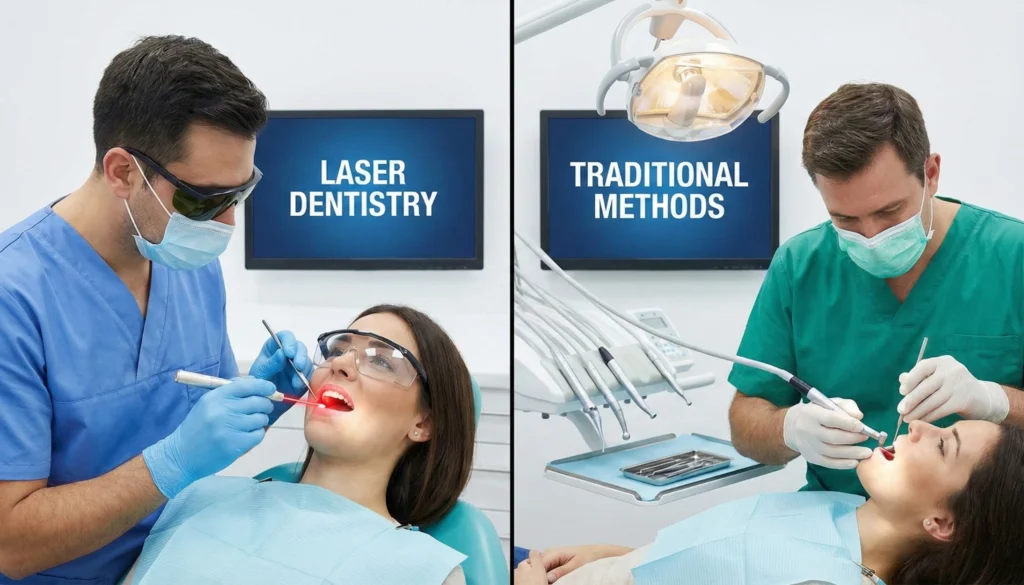
Laser vs Drill
Drills create noise, pressure, and vibration. Lasers often work without noise and with less force. This helps reduce fear and makes the visit smoother.
Laser vs Scalpel
Scalpels cut and may need stitches later. Lasers cut and seal at once, so stitches are often not required. That lowers recovery time.
Patient Comfort Comparison
Many people report less pain, less noise, and faster recovery with laser work compared to older methods.
Practice Applications of Laser Dentistry
In daily clinic work, lasers are used for many tasks. They help treat gum disease with deep cleaning and curettage. They remove decay and prepare a tooth for a filling. Lasers speed whitening steps, assist root canal cleaning, ease mouth sores and lesions, and perform a quick frenectomy. These uses show how laser dentistry fits routine care.
Laser Dentistry for Different Patients
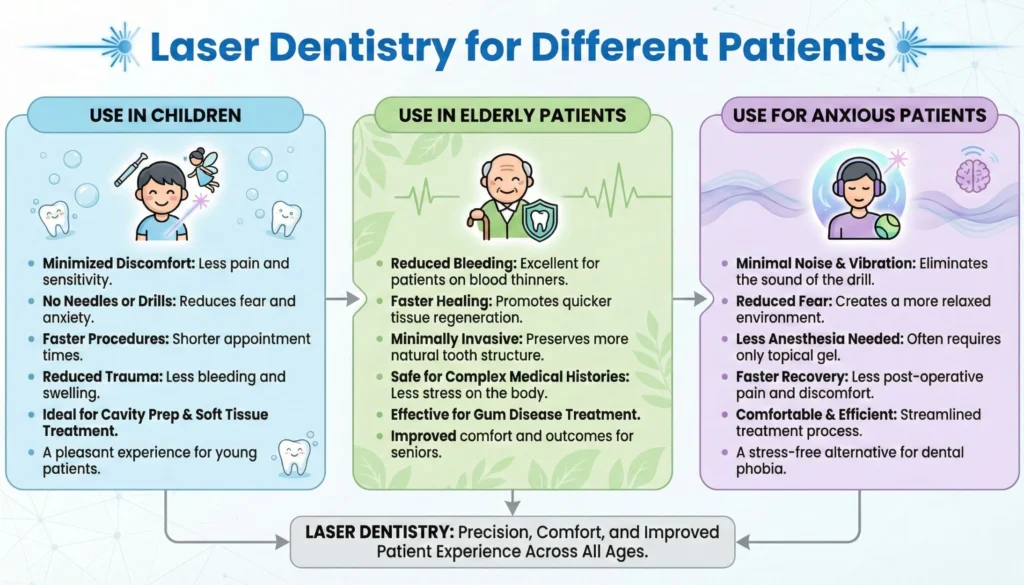
Use in Children
Children often dislike loud tools. Laser dentistry is quieter and gentler, so visits can feel calmer.
Use in Elderly Patients
Older adults may heal more slowly. Laser work causes less tissue damage, which helps recovery after treatment.
Use for Anxious Patients
For people who fear dental visits, lasers lower stress by cutting pain and noise.
Safety and Accuracy of Dental Lasers
FDA Approval and Standards
Lasers used in clinics must meet safety rules and approvals before use. That keeps treatment reliable and controlled.
Safety Measures in Clinics
Dentists set the right machine power for each job, use protective eyewear, and follow strict steps to make procedures safe and accurate.
Limitations of Laser Dentistry
Laser care has some disadvantages. It may not reach very deep decay. Old metal fillings can block the beam. The machine cost can make the treatment more expensive. Dentists also need special training. For some problems, lasers are used together with traditional tools rather than replacing them.
Cost and Time Benefits in Practice
Laser sessions are often shorter and may need fewer follow up visits. The initial cost might be higher, but fewer appointments and faster healing can lower long term expenses for some patients.
Future of Laser Dentistry
Laser dentistry keeps growing as machines get better. New devices are more precise and easier to use. Over time, lasers may cover more treatments and become a regular choice in modern dentistry.
Conclusion
Laser dentistry offers a calmer and more precise way to care for teeth and gums. It cuts pain, helps healing, and makes many dental tasks simpler. While there are disadvantages and extra costs to think about, the advanced benefits make laser dentistry a strong option for many people.
For clinics and dealers searching for wholesale dental material suppliers in India, Dhruv Dentofix supports dental practices with reliable materials, steady supply, and fair pricing for everyday clinical use.