









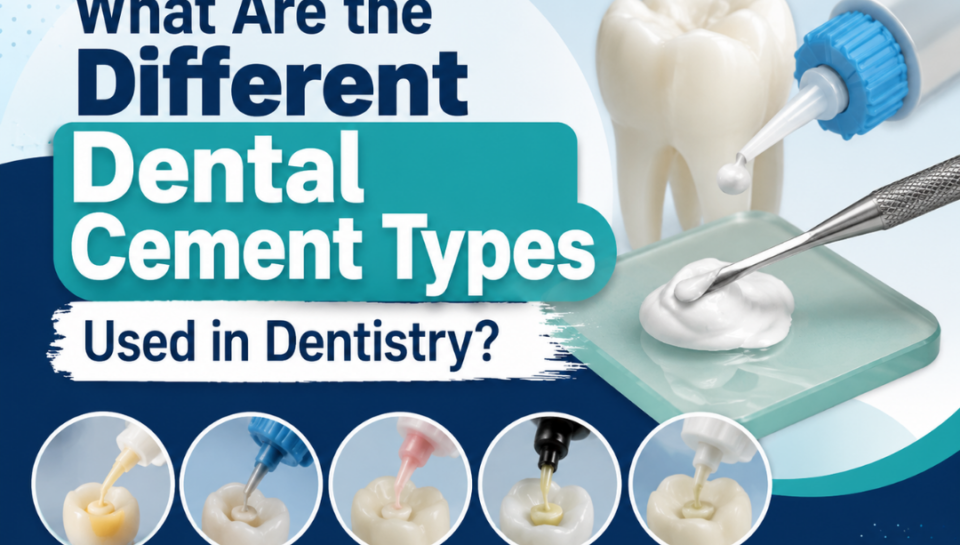
There are many types of dental cements. Dentists choose them very carefully for us. The right one makes a big difference between a strong restoration that lasts long and future problems.
It is not just glue. It holds crowns, bridges, veneers, and posts firmly in place. It also protects the tooth and seals out bacteria.
This blog will explain different types of dental cements with their features and uses.
What Is Dental Cement?
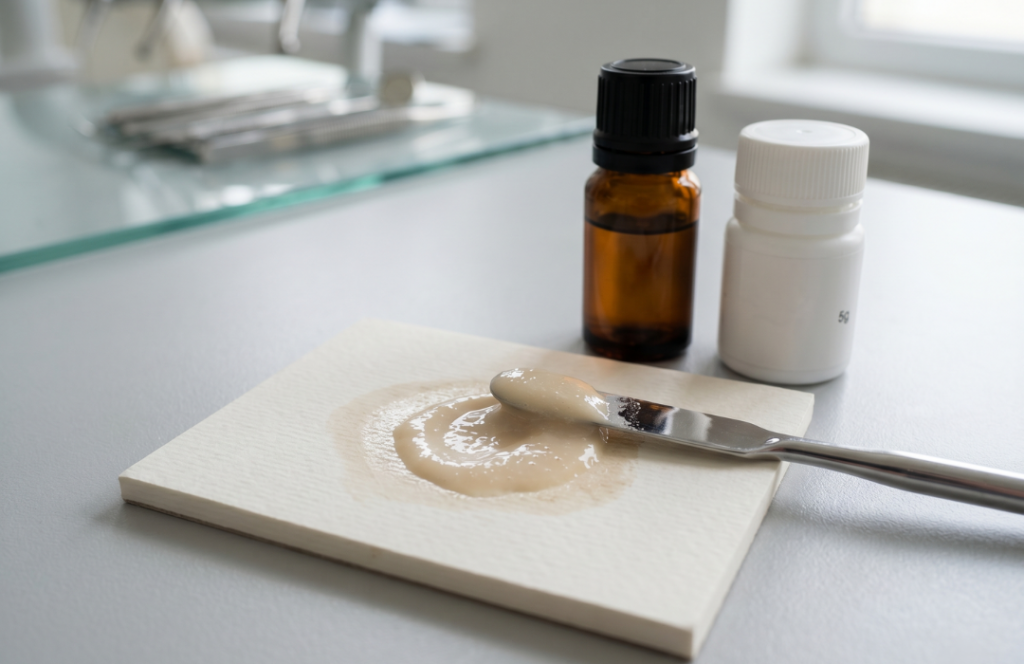
Dental cement is a material used to join, seal, line, or repair a tooth. Dentists use it in many treatment steps. Some types of dental cements help fix restorations. Some protect the tooth under a filling. Some are used for short-term work only. The right choice depends on strength, how well it sticks, how it handles moisture, and the uses of dental cements in that case.
How Dental Cements Are Classified
Temporary vs Permanent Cements
The main classification of dental cement is simple. Some are temporary, and some are permanent. Temporary cements are used for short-time holding. They are easy to remove later. Permanent cements are made to stay for a long time and hold restorations more firmly. This classification helps dentists match the cement to the treatment plan.
Luting, Lining, and Restorative Cements
Another classification is based on the job the cement does. Luting cements are used to fix crowns and bridges to teeth. Lining cements sit near the pulp and help protect it. Restorative cements can also work as fillings in some cases. These groups show the main uses of dental cements in daily practice.
ISO and ADA Classification
There is also a type-based classification. Type I is for luting. Type II is for restorative use. Type III is for liners and bases. Some types of dental cements can fit more than one group, depending on how they are mixed and used.
Zinc Phosphate Cement
Zinc phosphate cement is one of the oldest types of dental cements. It is made from zinc oxide powder and phosphoric acid liquid. After mixing, it becomes hard and thin when placed. That thin layer helps restorations sit well. It does not bond directly to tooth structure. It can also irritate the pulp if it is used in deep areas without a liner or base.
Common Uses
- Cementing crowns and bridges
- Fixing inlays, onlays, and posts
- Cases that need a thin cement layer
- Long-used routine cement work
Advantages and Limitations
- Good strength for many cases
- Thin film helps fit restorations well
- Reliable and well known
- Usually lower cost than newer cements
- Does not bond to the tooth
- Can bother the pulp in deep teeth
- Can wash away more than resin cement
- More brittle than many newer materials
Zinc Polycarboxylate Cement
This is another one of the older types of dental cements. It uses zinc oxide and polyacrylic acid. It can bond to enamel and dentin, so it is more tooth-friendly than zinc phosphate. It is also less harsh on the pulp. Still, it is thicker and not as stiff as some other cements.
Common Uses
- Cementing crowns and bridges
- Cementing orthodontic bands
- Cementing inlays and onlays
- Some liner and base use
Advantages and Limitations
- Bonds to tooth structure
- Gentler on the pulp
- Good for many routine cases
- Acceptable strength
- Thicker mix than some other cements
- Less stiff than zinc phosphate
- Not best for heavy chewing force
Glass Ionomer Cement (GIC)
Glass ionomer is one of the most useful types of dental cements. It is made from glass powder and acid. It bonds to the tooth and releases fluoride over time. That fluoride can help protect the tooth from decay. It also works well with tooth expansion. But it needs dry control when it sets, and it is not the strongest option.
Common Uses
- Cementing crowns and bridges
- Cementing orthodontic bands
- Liners and bases
- Small restorations in low-stress areas
- Preventive and child dental work
Advantages and Limitations
- Bonds to enamel and dentin
- Releases fluoride for a long time
- Helps lower the chance of new decay
- Matches tooth movement fairly well
- Less strong than resin cement
- Sensitive to moisture when setting
- Less good-looking than resin
Fluoride Release Benefits
Fluoride release is one of the best things about this material. It can help nearby tooth parts stay stronger and may help stop decay from coming back.
Resin-Modified Glass Ionomer Cement (RMGIC)
RMGIC is one of the newer types of dental cements. It mixes glass ionomer with resin. This gives better early strength and easier use. It still bonds to the tooth and still releases fluoride. Most regular GIC materials release more fluoride overall, but RMGIC is easier to handle.
Common Uses
- Cementing crowns and bridges
- Orthodontic bands
- Bases and liners
- Child dental care
Advantages and Limitations
- Stronger early set than GIC
- Easier to handle
- Less sensitive to moisture
- Still releases fluoride
- Releases less fluoride than regular GIC overall
- Not right for every heavy-load case
Resin Cement
Resin cement is one of the strongest types of dental cements. It is used when a strong bond and good looks are both needed. It works well with ceramic restorations and thin cosmetic work. It has low water washout and lasts well. It can be self-cure, light-cure, or dual-cure. Self-adhesive types are also used because they cut down on steps.
Common Uses
- Bonding ceramic restorations
- Cementing veneers
- Cementing posts
- Implant-supported restorations
- Thin cosmetic restorations
Advantages and Limitations
- Strong bond
- Good color match
- Very low washout
- Good for visible teeth
- More careful work needed
- Needs good surface prep
- Light may not reach deep areas well
Self-Cure, Light-Cure, and Dual-Cure Types
Self-cure resin cement hardens without light. Light-cure needs a curing light. Dual-cure uses both and is helpful when light cannot reach well.
Aesthetics and Long-Term Performance
Resin cement is often chosen for front teeth because it looks good. It also keeps its seal well and helps reduce leak paths over time.
Zinc Oxide Eugenol (ZOE) Cement
ZOE is one of the simple types of dental cements used for short-term work. It contains zinc oxide and eugenol. It feels soothing and is easy to remove later. It is not made for long use. Eugenol can also affect resin materials, so the tooth should be cleaned well before final resin cement work.
Common Uses
- Temporary crown cementation
- Temporary restorations
- Short-term tooth cover
Advantages and Limitations
- Easy to place and remove
- Good for short-term use
- May help reduce bacteria
- Low strength
- Not for long-term holding
- Can affect resin setting
Zinc Oxide Non-Eugenol Cement
This is like ZOE, but without eugenol. It is used when a future resin bond is planned. It gives short-term hold without the resin problem.
Common Uses
- Temporary crowns and bridges
- Provisional restorations
- Cases with later resin work
Advantages and Limitations
- No eugenol issue
- Easy temporary use
- Good for short-term holding
- Not strong enough for long-term use
Calcium Hydroxide Cement
Calcium hydroxide is used mostly as a liner, not as a main cement. It has a high pH and helps protect the pulp. It is useful in deep cavities. Still, it is weak and can dissolve more easily than other types of dental cements.
Common Uses
- Direct pulp capping
- Indirect pulp capping
- Deep cavity liners
- Pulp protection under restorations
Advantages and Limitations
- Helps protect the pulp
- Supports hard tissue repair
- Has antibacterial action
- Weak and soluble
- Not for main cement use
Temporary Dental Cements
Temporary dental cements are used when the final restoration is not ready yet. They hold the tooth cover in place for a short time. Some are zinc oxide based, and some temporary glass ionomer materials are also used. This part of the uses of dental cements is all about short-term help.
When Temporary Cements Are Used
- Between visits
- For provisional crowns and bridges
- When easy removal is needed later
Common Types Available
- Zinc oxide eugenol
- Zinc oxide non-eugenol
- Temporary GIC-based materials
Key Benefits and Drawbacks
- Easy to use and remove
- Protects the tooth for a short time
- Not made for long-term strength
- Durability is limited
Handling and Placement Tips
- Keep the area dry
- Use the right powder-to-liquid ratio
- Follow proper steps for resin cement
- Pick the cement based on the case
Modern Trends in Dental Cements
Newer types of dental cements now lean toward resin-modified, self-adhesive, and bioactive materials. These aim to make work easier, cut down steps, and give better tooth support. Still, each product must be used the right way, or the result may not last well.
Conclusion
The types of dental cements used in dentistry all have their own job. Some are permanent and strong. Some are temporary and easy to remove. Some release fluoride. Some protect the pulp. Some give better looks. The classification helps dentists choose well, and the uses of dental cements show why no single material fits every case.
Looking for reliable dental products and equipment? Dhruv Dentofix is among the best dental equipment suppliers in India, offering quality solutions for modern dental practices.