









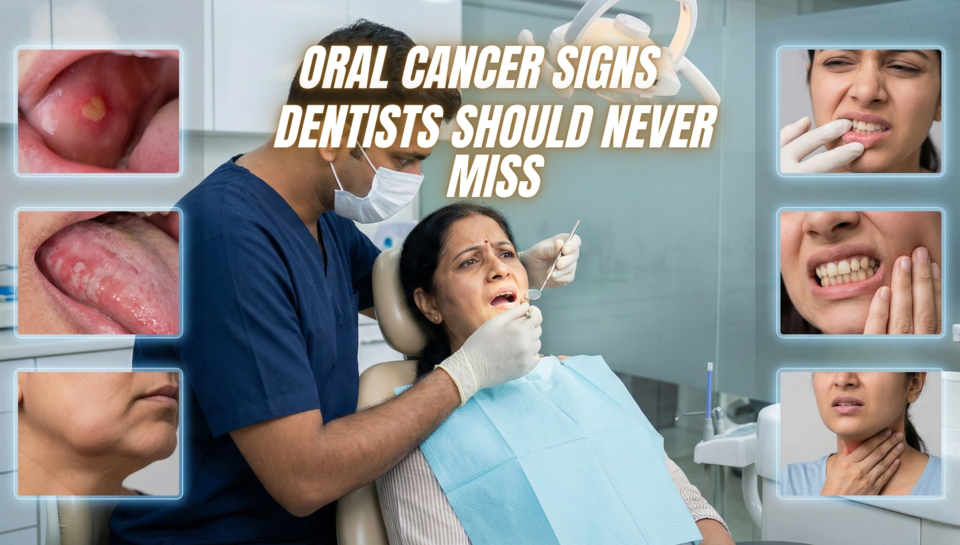
Indian people face oral cancer a lot. It mostly happens because of drug use, smoking, or drinking. Yet even if you are not doing any of these, there are other reasons that can lead to the same situation. Early stage treatment can prevent bigger losses. This blog will help you understand common oral cancer symptoms to prevent further loss.
What Is Oral Cancer?
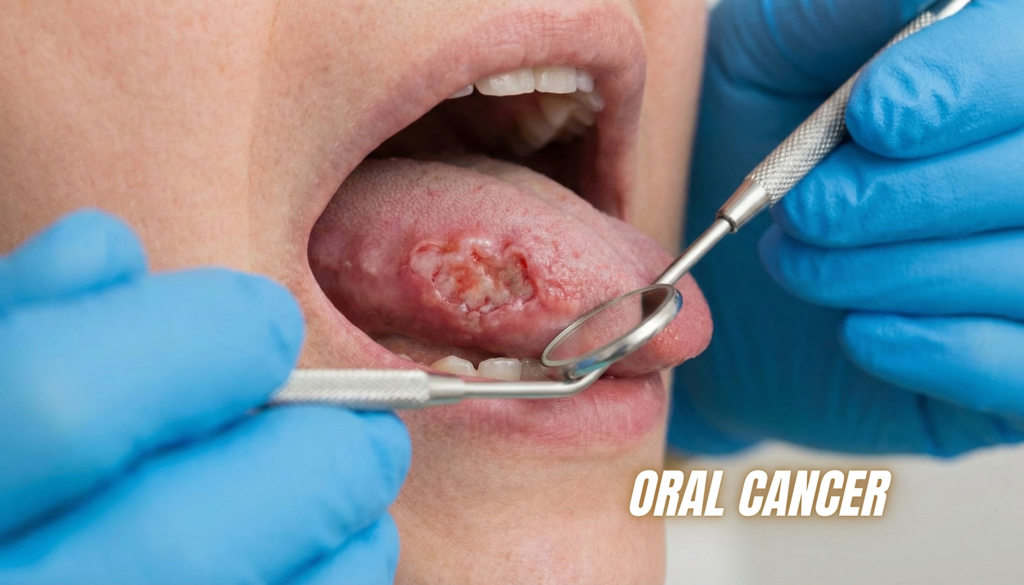
Oral cancer means some cells in the mouth grow the wrong way. It can start on the tongue, the gums, the lip, the cheek, or the floor and roof of the mouth. When patients find signs early, treatment is easier. Knowing the usual oral cancer symptoms helps catch the problem before it moves through stages and lowers the survival rate.
Finding Mouth Cancer Early
You do not need special tools. Once a month, stand in front of a mirror with good light. Look and feel for changes that last more than three weeks. If something is new, growing, or painful, see a doctor. Early checks help avoid the last stage and may reduce the need for major surgery. Prevention and regular checks give the best chance.
Types Of Oral Cancer
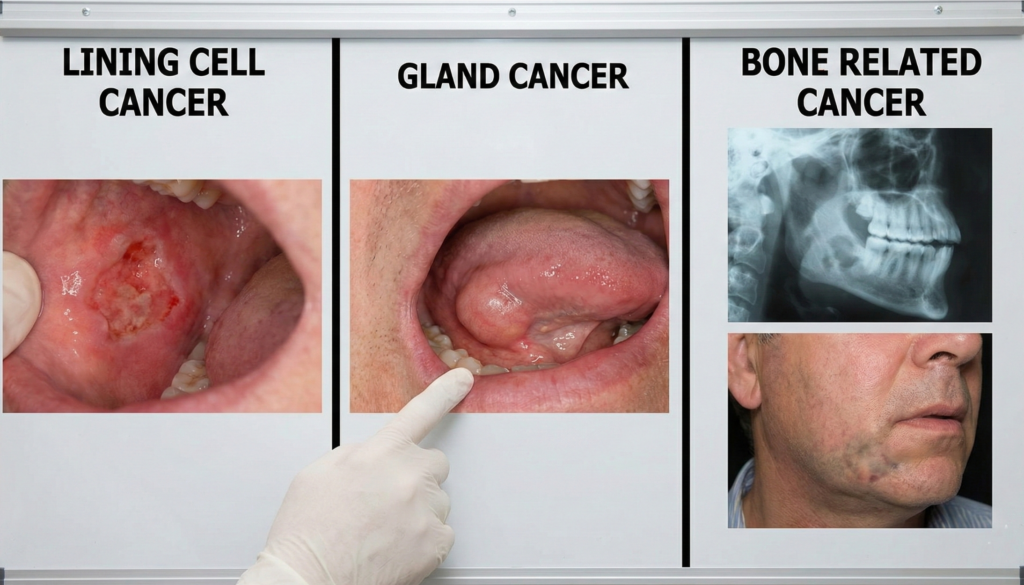
Different cancer types start in different parts. The type guides what doctors do next.
| Type | Where it starts | Note |
| Lining cell cancer | Inner lining of mouth | Most common |
| Gland cancer | Saliva glands | Less common |
| Bone related cancer | Jaw bone | Can affect teeth and chewing |
Some types appear near a cavity, others near the gums or under the lip. Knowing the type helps pick the right treatment and prevention plan.
Sores That Do Not Heal
- Ulcers lasting over three weeks
Most mouth sores heal in a week or two. If a sore stays for more than three weeks, it is one of the main oral cancer symptoms to check. - Sores that bleed easily
A spot that bleeds with light touch or while eating is not normal. Tell a doctor. - Open wounds in the mouth
Raw areas that do not close need an exam. This can be an early sign even before other symptoms appear.
Red And White Patches
| Patch type | What to watch for |
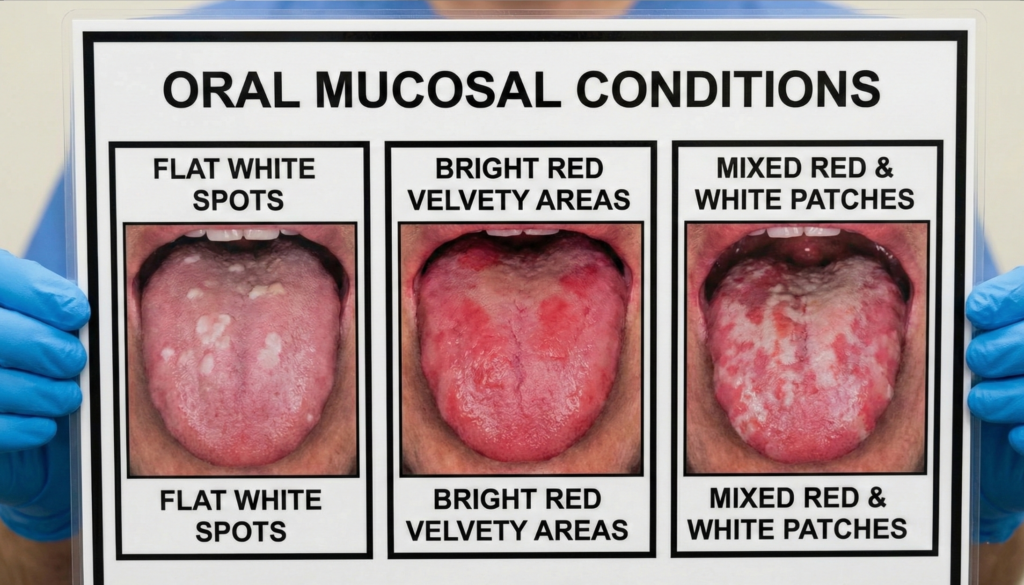
| Flat white spots on the tongue | White areas that do not wipe off |
| Bright red velvety areas | Smooth red patches that stay |
| Mixed red and white patches | Both colors in one spot |
These patches often have no pain at first. Any change in size, color, or feel is a likely oral cancer symptom and should be checked.
Unusual Lumps And Bumps
- Thickening of the cheek
A firm spot inside the cheek that feels different from the other side. - Swelling in the neck
A new lump in the neck can mean the disease has reached nearby glands. - Hard lumps under the jaw
Lumps that do not move and are hard need quick attention.
Changes In How The Mouth Feels
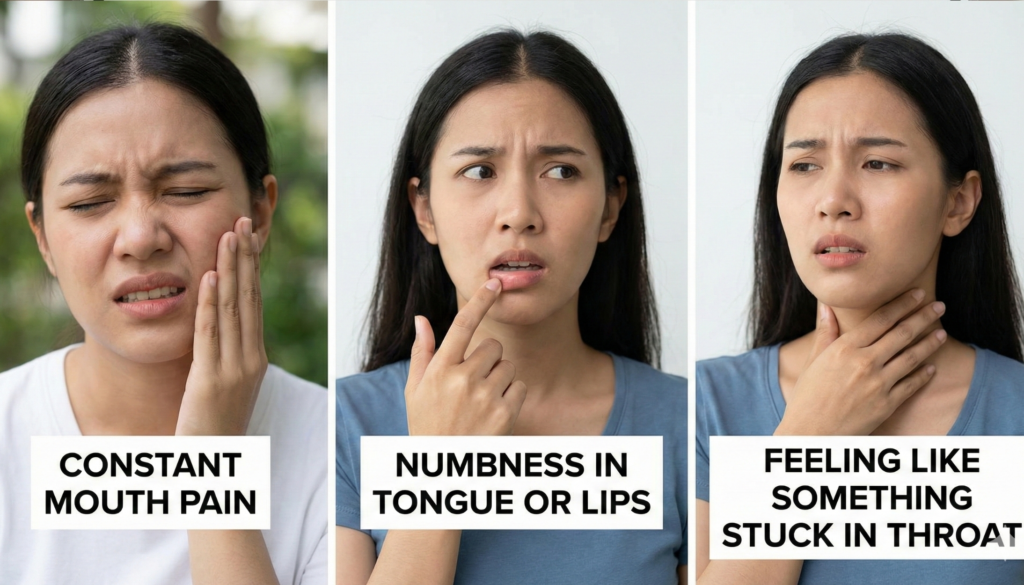
Constant Mouth Pain
Pain that stays in one area is not normal. It is a warning.
Numbness The Tongue Or Lips
Loss of feeling or a tingling in the tongue or lips can mean nerves are affected.
Feeling Like Something Is Stuck In The Throat
This steady stuck feeling, even when nothing is there, should be checked.
These sensations are common oral cancer symptoms to report.
Problems With Chewing And Speaking
- Trouble moving the jaw
Stiffness or pain that limits opening the mouth makes chewing hard. - Difficulty swallowing food
Food that seems to stick or pain with swallowing is a sign to see a doctor. - Changes in the sound of the voice
A lasting hoarse or different voice can point to problems nearby.
Problems like these may appear in different stages and affect the daily life for patients.
Teeth And Jaw Issues
- Loose teeth with no clear cause
Teeth that loosen without gum disease or injury can be a sign. It is not always just a cavity. - Dentures that do not fit anymore
Changes in mouth shape can make dentures stop fitting. - Swelling that makes the jaw hurt
Pain when chewing and swelling need a check.
These signs may come from the bone or tissue changes that happen with some types of oral cancer.
Other Warning Signs To Watch For
- Ear pain without an infection
- Unexplained weight loss
- Persistent bad breath
When you see these with other signs, act quickly. They can be part of oral cancer symptoms.
What Happens During A Screening
Checking with light and touch
The doctor looks inside the mouth and feels for lumps or thick areas.
Looking At The Throat And Tongue
Small mirrors or a camera may be used to see deeper spots.
When To Ask For More Tests
If something looks odd, the doctor may suggest a biopsy, scans, or a blood test. These tests show the stage and help decide on treatment or surgery. Test results help doctors plan the right care and explain the likely survival rate.
Conclusion
Small, lasting changes in the mouth matter. Watch for the oral cancer symptoms listed here. If you see sores that do not heal, patches, lumps, or trouble chewing and speaking, get checked. Early action and simple prevention steps improve treatment choices and raise the chance of a good outcome.
Looking for trusted dental materials you can rely on? Check out Dhruv Dentofix, one of the best dental material suppliers in India. Treat your patients with quality and advanced technology at wholesale prices.