









Losing a tooth hurts a lot and stresses you out. It changes how you eat, talk, and even how you see your own smile. The nice part? Dental implant procedures can fix it. They give you back a real-looking tooth and make eating and speaking feel normal again.
Before you go for dental implant procedures, you need to know what might cause trouble and how the dentist avoids those issues. That’s why risk assessment is the first big step.
What Is Risk Assessment in Dental Implant Treatment?
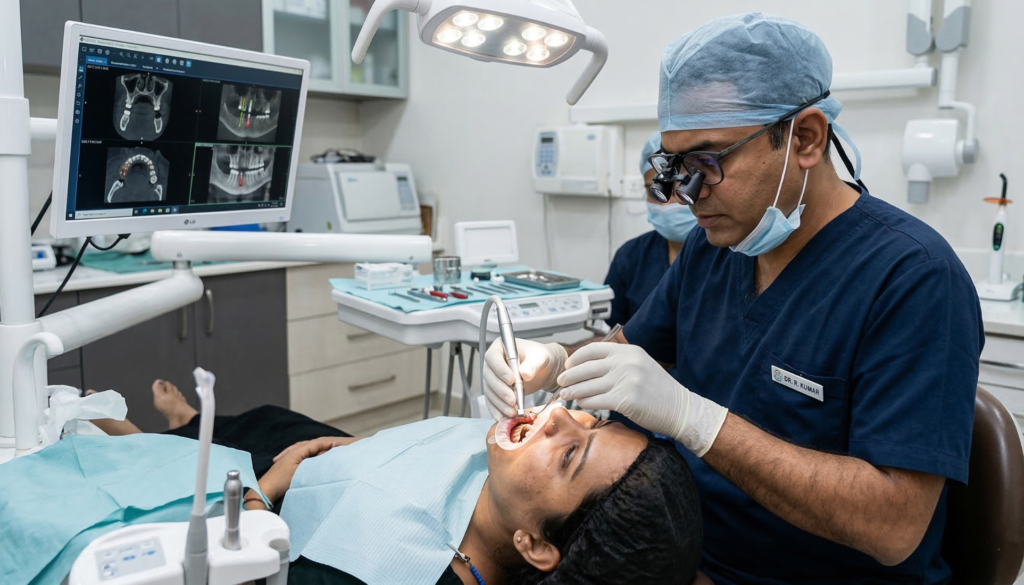
Risk assessment is just the dentist checking things before anything starts. They look at your health, your mouth, your x-rays or scans, and your habits. The point is to find anything that could go wrong. When done right, it helps pick the best implant, pick the right time, and cut down on problems during and after dental implant procedures.
Common Risks in Dental Implant Procedures
Here’s a simple table showing the main risks:
| Risk | What it means | How often it happens |
| Infection | Germs cause swelling, pain, or ongoing soreness | Not too common, but higher if you don’t clean well; peri-implantitis hits about 20% over time |
| Implant failure | The implant doesn’t stick to the bone | Pretty rare. Most work fine, around 95-98% success |
| Nerve injury | Numb or tingly feeling if a nerve gets hurt | Very rare. Lasting issues usually under 1-3% |
| Sinus problems | Implants in upper jaw poke into sinus area | Rare. Under 5% when planning uses good 3D scans |
| Peri-implantitis | Soreness around implant that eats away bone | Up to about 20% in some cases over years |
Factors That Increase Dental Implant Risk
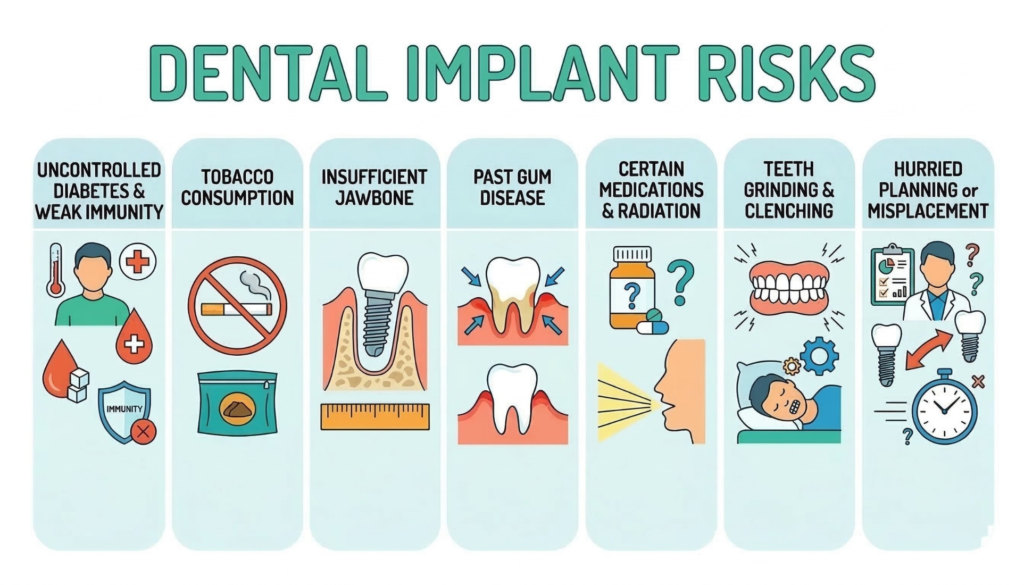
- Bad overall health, like diabetes you can’t control or weak immune system.
- Smoking or chewing tobacco slows healing big time.
- Not enough bone in your jaw to hold the implant steady.
- Past gum disease that damaged things.
- Some medicines or old radiation treatment near the jaw.
- Grinding or clenching your teeth hard puts too much force on the implant.
- Planning in a rush or picking the wrong size/spot for the implant.
Long Term Care to Prevent Implant Problems
Taking care of your implant every day for years really pays off. Early gum soreness (called peri-implant mucositis) can go away if you clean better. Ignore it, and it turns into peri-implantitis, which hurts the bone.
Easy steps to keep it good:
- Brush and floss right around the implant every single day.
- See your dentist often for cleanings and quick checks.
- Fix any gum soreness fast so it doesn’t get worse.
- Keep stuff like diabetes under good control.
- Quit smoking and stop chewing on hard things like ice or nails.
- Wear a night guard if you grind your teeth while sleeping.
These little things help new dental implant procedures stay strong and last many years.
Warning Signs After Dental Implant Surgery
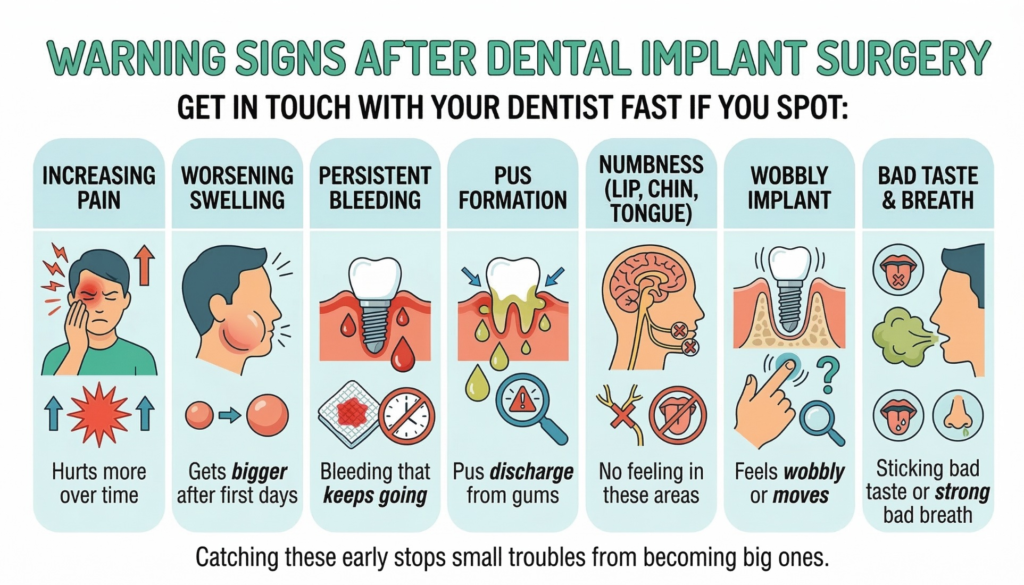
Get in touch with your dentist fast if you spot:
- Pain that starts hurting more, not less.
- Swelling gets bigger after the first couple days.
- Bleeding that keeps going or pus coming out.
- The lip, chin, or tongue feels numb.
- The implant feels wobbly or moves a bit.
- Bad taste in mouth or really strong bad breath that sticks.
Catching these early stops small troubles from becoming big ones.
Common Dental Implant Planning Mistakes
- Not using detailed scans, easy to miss bone edges or nerve spots.
- Picking the wrong size or the wrong place for the implant in your jaw.
- Forgetting to check how your bite pushes can overload everything.
- Putting the implant where gum disease is still there, untreated.
- Putting pressure on it too soon before the bone grabs hold. Doing this right away sometimes leads to early failure.
- Not asking about your full health history or old tooth problems.
Skipping these slip-ups makes dental implant procedures way safer and easier to predict the outcome.
Conclusion
Dental implant procedures give strong, long results to lots of people. With good checks upfront, smart planning, and keeping up with home care, problems stay low. Tell your dentist everything about your health and habits. Stick to the care rules after, and call right away if something feels off. If trouble does show up, most times the implant can get fixed or swapped. Picking a solid plan and following through gives you the best chance with dental implant procedures.
Buy the dental implant surgery kit from Dhruv Dentofix for precise, reliable tools that support safe and efficient dental implant procedures.